Business rules, generated and governed
Your experts write the rule in plain English. RuleGenz writes it in your rules language, checks it against your own data, explains it back and records who approved it.
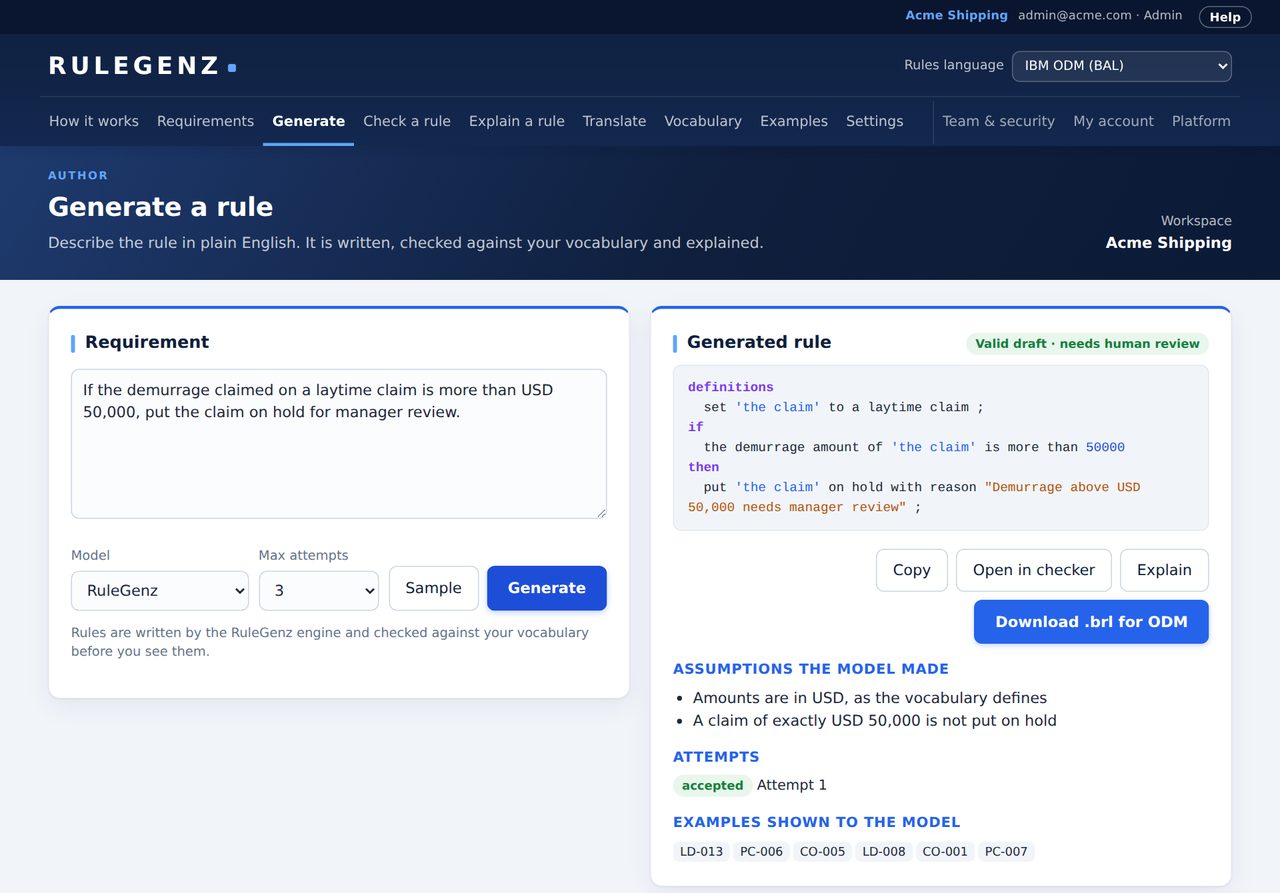
If the demurrage claimed on a laytime claim is more than USD 50,000, put the claim on hold for manager review.
if the demurrage amount of 'the claim' is more than 50000 then put 'the claim' on hold ;
For any rule-heavy business
The challenge
A policy owner writes the change. An analyst interprets it. A developer codes it. A tester finds what was lost in translation, and it goes round again.
…and back to the start when something was lost in translation
Each hand-off rewrites the policy in someone else's words.
Simple threshold or rate changes queue behind larger work.
Business owners cannot easily read the rule that went live.
A policy-to-rules platform
RuleGenz sits between your policies and whichever engine runs your rules. There is nothing to replace, and nothing to migrate unless you want to.
IBM ODM, Drools, DMN, GoRules, .NET, Java, Python, SQL and more. The same approved rule, in the language you run today or tomorrow.
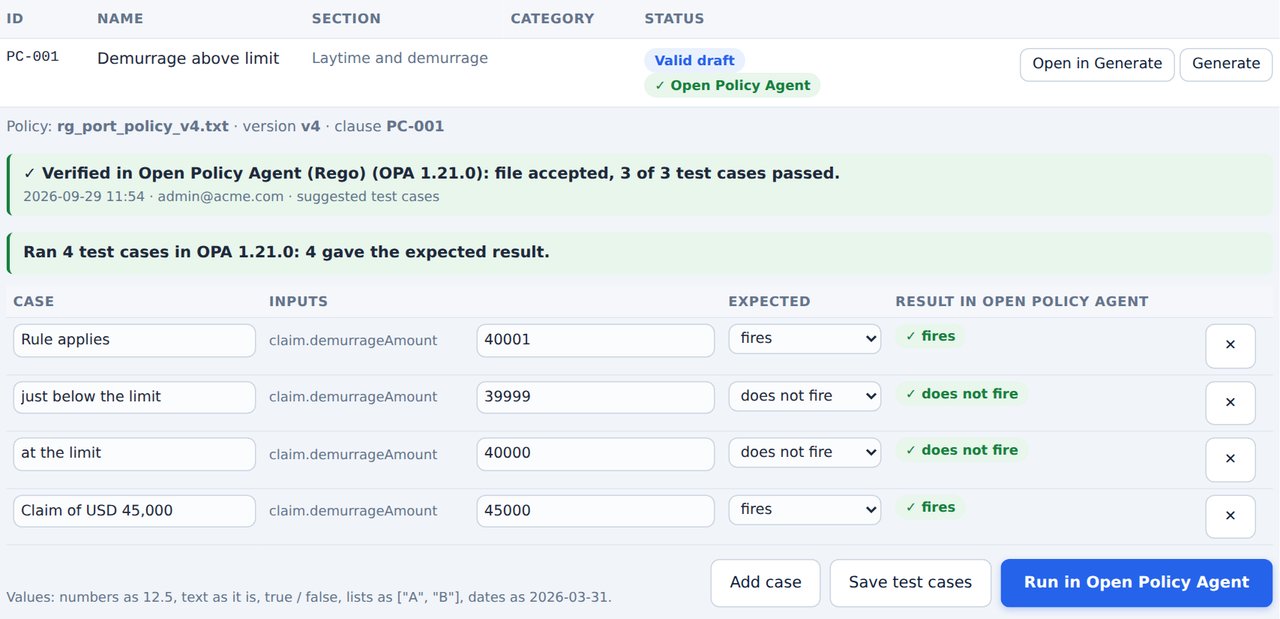
Every rule checked, explained in plain English and approved by a named reviewer, with its full version history.
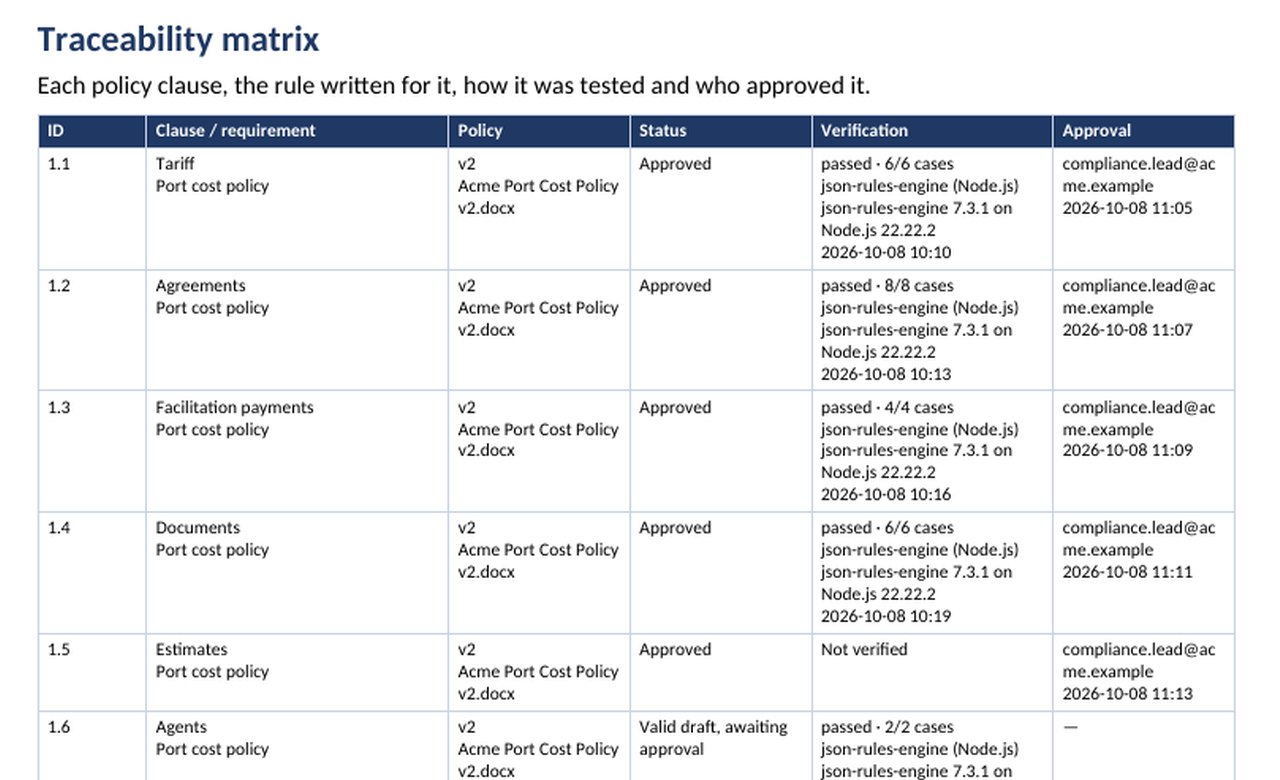
Each rule links to the clause and policy version it implements, so audit questions take minutes, not weeks.
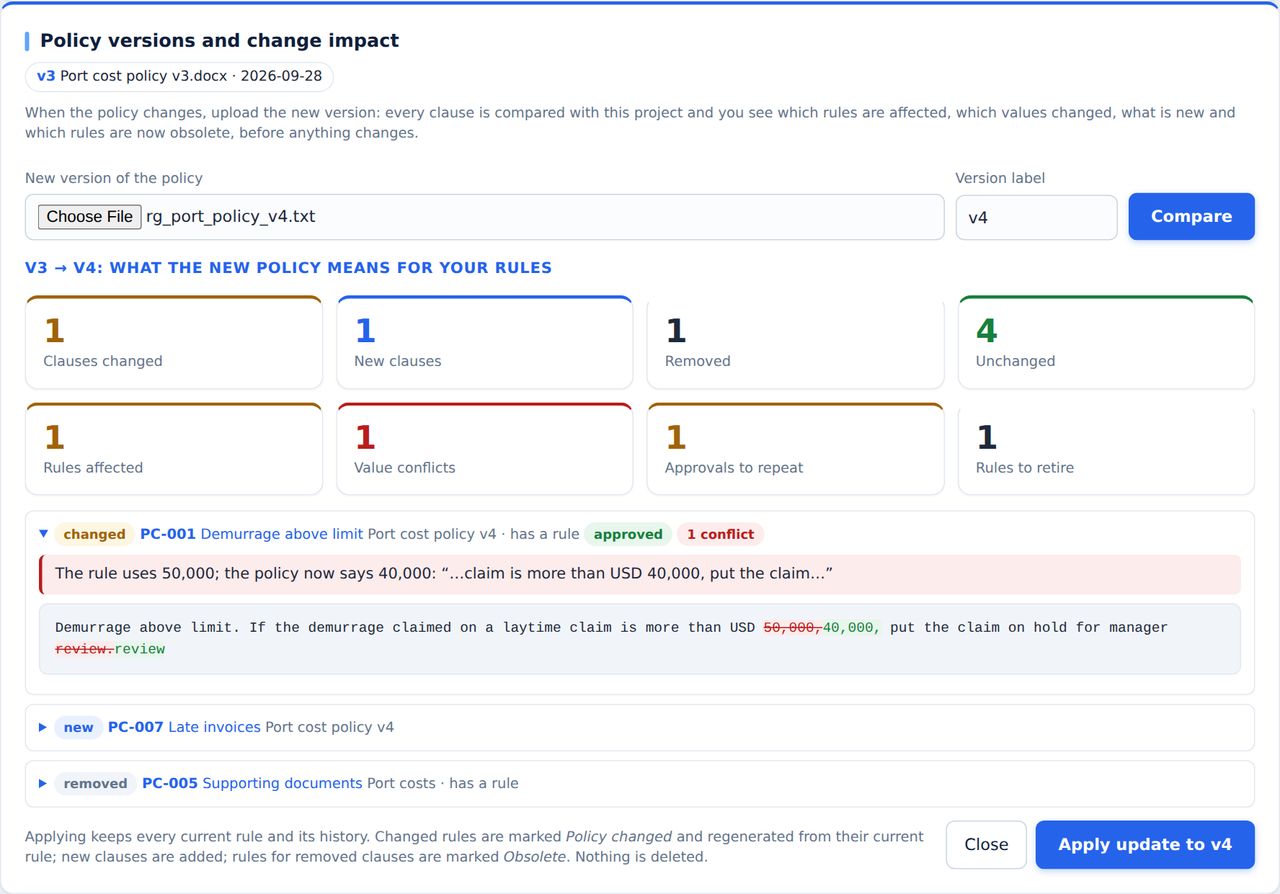
When the policy changes, see which rules are affected, which values now conflict and which rules to retire, before anything goes live.
How it works
RuleGenz drafts rules; people approve them. Your normal testing and release process does not change.
Your business team RuleGenz Your developers and systems
Type a requirement, paste a list, or import a whole policy: Word, Excel, CSV, PDF or text.
Only your own business terms and valid syntax. Failed checks are corrected automatically.
Every rule is read back in plain English, with assumptions and gaps listed, then approved by a named reviewer.
One file per rule plus a combined file for a single import, each traced to its requirement ID.
Policy change impact
Upload the new version of the policy. Every clause is compared with the rules you already have, and you see the impact before anything changes.

A limit drops from USD 50,000 to USD 40,000. RuleGenz finds the clause, sees that the live rule still uses 50,000, flags the conflict and shows the approval that must be repeated.

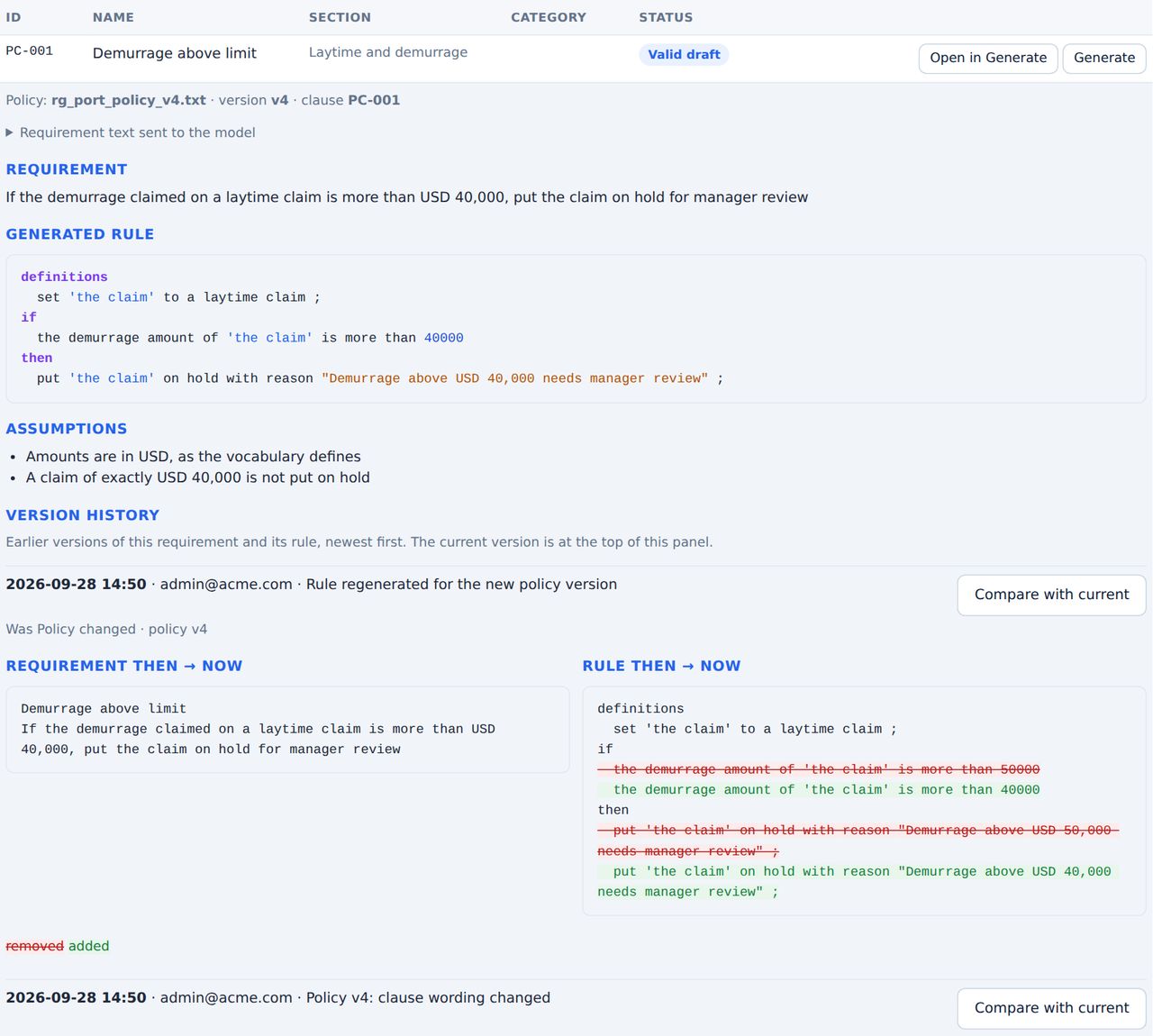
Each change records who made it, when and why, and who had approved the version before. Compare any two versions side by side.
Migration

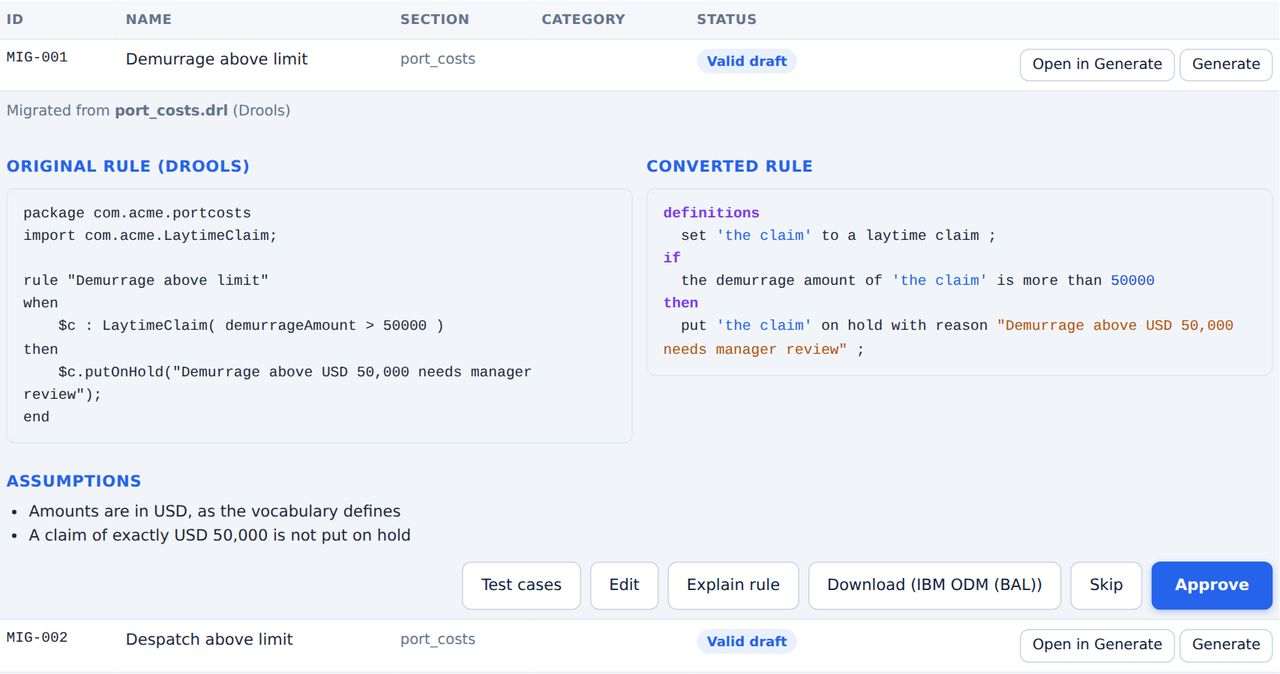
Upload rule files or a zip from Drools, DMN, JSON rules, Microsoft RulesEngine, NRules, Python, SQL, IBM ODM and more. Each rule is split out, converted, checked and explained, then exported to the engine you are moving to.
Conversion from other languages is AI-assisted, and every converted rule is reviewed before approval.
The product

Write the requirement as you would in an email. RuleGenz writes the rule, checks every term against your vocabulary and lists the assumptions it made, such as whether exactly USD 50,000 counts.

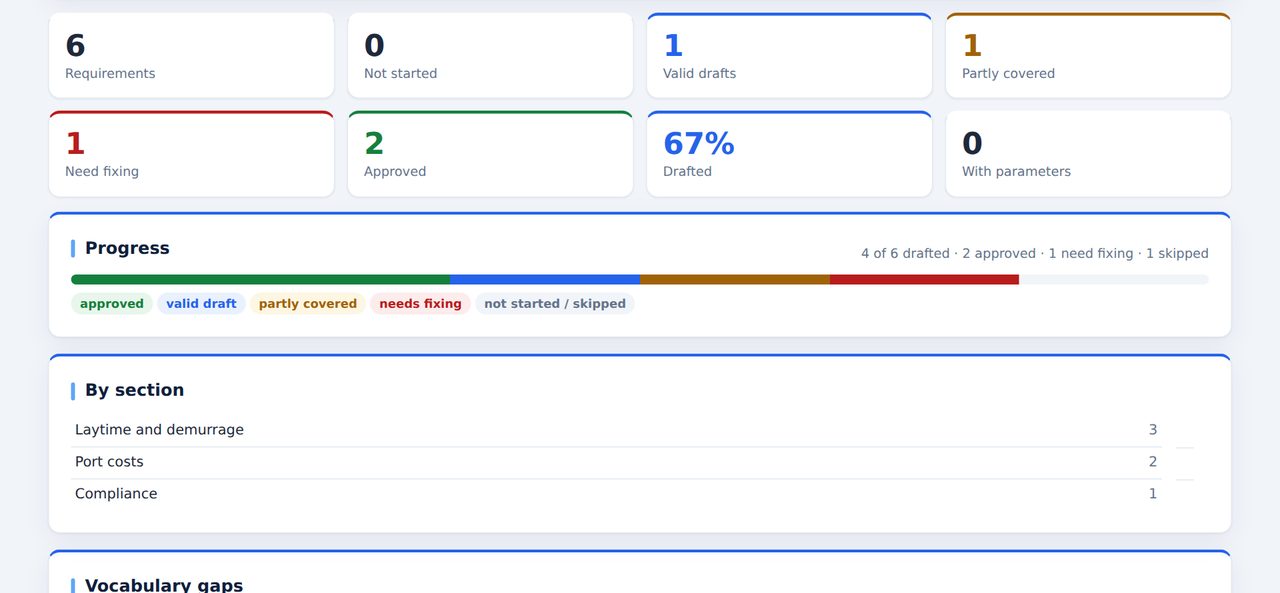
Import a policy, contract or requirements list and generate every rule in one run. The dashboard shows what is drafted, approved or needs attention.
Rules languages
Choose the language once and every rule is generated, checked and downloaded in it. Switch at any time to see the same rule in another format, at no extra AI cost.
Benefits
A threshold or rate change becomes a sentence, a check and an approval, not a ticket in a development queue.
Every rule is checked against your data before anyone sees it, and assumptions are raised up front instead of in testing.
Each live rule traces to its requirement, its plain-English explanation and the person who approved it.
Policy owners read and approve rules in English; they no longer need to read rule code.
Ten rules or a thousand: new customers, tariffs and regulations without growing the team at the same rate.
See every rule a policy change affects before it goes live, with conflicts flagged and nothing missed.
Return on investment
Rule changes a year × hours saved per change × blended hourly cost
In an illustrative case, a team makes 100 rule changes a year, each taking 12 hours of analyst, developer and tester time. If RuleGenz brings that to 4 hours, the team saves 800 hours a year: about £48,000 at £60 an hour, before counting faster changes and fewer production errors.
Illustrative figures only, not a promise. A pilot measures your real figures against your current process.
Security and control
Security Overview, Data Protection Pack and completed security questionnaire available for your IT and procurement teams.
Azure OpenAI, OpenAI or Anthropic, under your agreements. The key is encrypted and never shown again.
Workspace data and the rule engine are hosted in London, encrypted in transit and at rest.
Invitation-only accounts, two-step login for everyone who can change rules, single sign-on and allowed email domains.
Each organisation's data is isolated by the database itself, not only by the application.
Sign-ins, imports, approvals and downloads, with who and when. Entries cannot be edited or deleted.
Standard files that keep working without RuleGenz. Download all your data at any time.
Founding customer pilot
Agree users, requirements and success measures.
Workspace, AI connection and your vocabulary.
Rules for one real policy, approved by your experts.
Test a sample in your environment and review the results.
Book a demo
A 30-minute demonstration, then a 60 to 90-day pilot on one of your real policies, measured against your current process.